Client
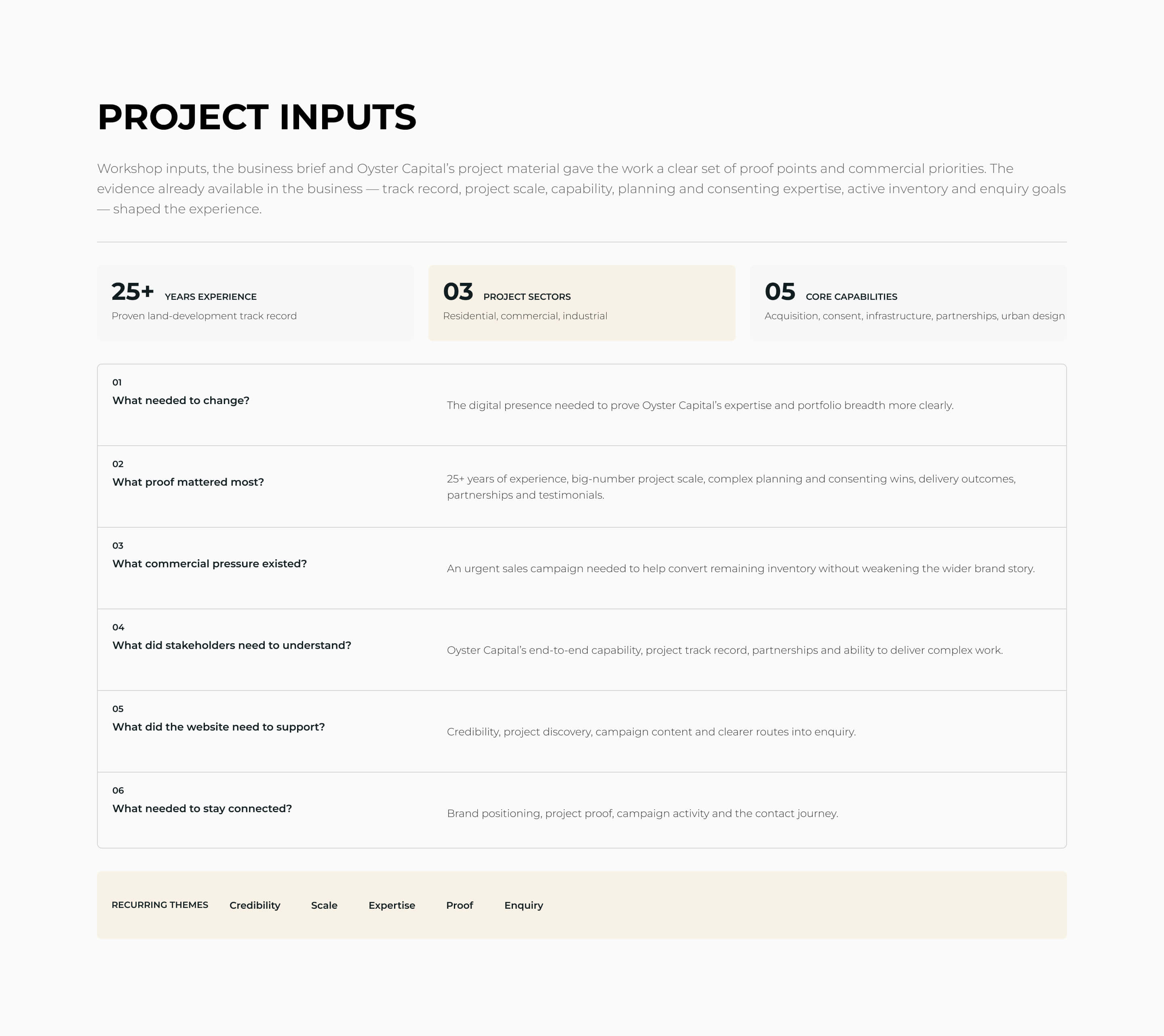
Oyster Capital is a privately owned New Zealand land development company with 25+ years of experience delivering large-scale residential, commercial and industrial projects.
Problem
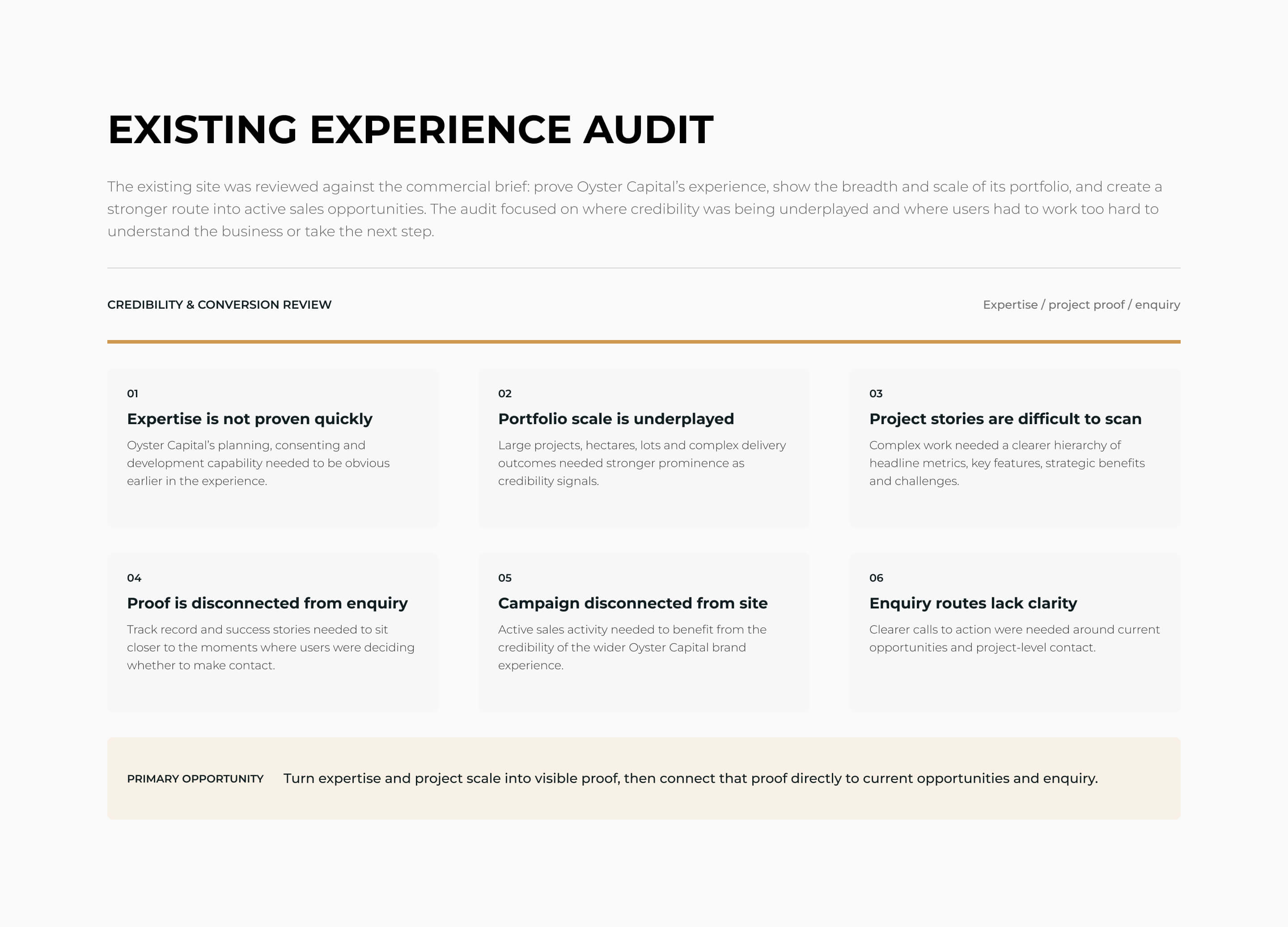
Oyster Capital had the experience, scale and track record, but its digital presence was underselling the business. With an urgent sales campaign also needing to move remaining inventory, the challenge was to turn that credibility into clear proof and stronger enquiry.
Strategic framing
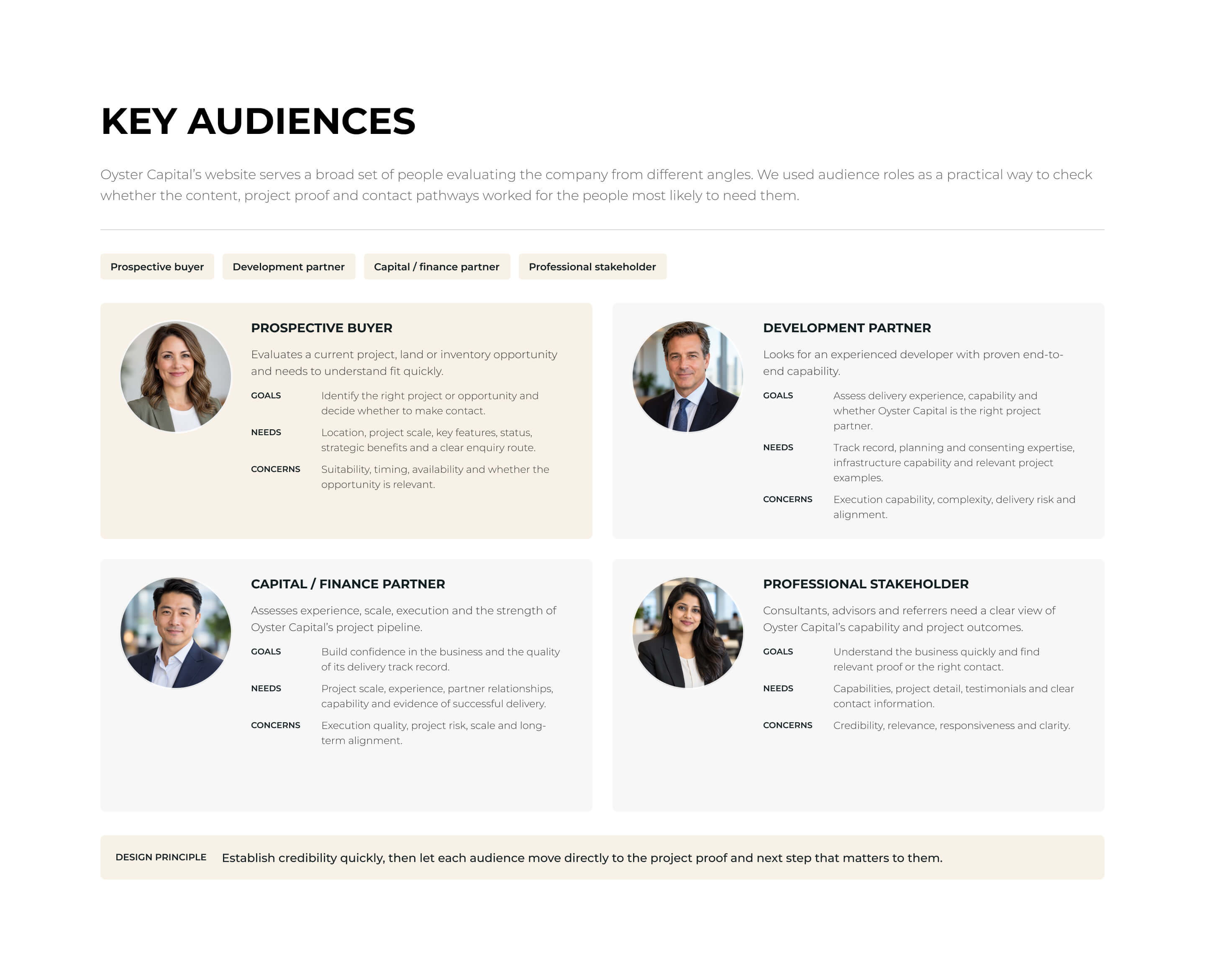
Get prospective buyers, partners and stakeholders who are evaluating Oyster Capital to understand its experience and project scale, by making capability and proof easy to scan, so they can move confidently into project exploration and enquiry.
Solution
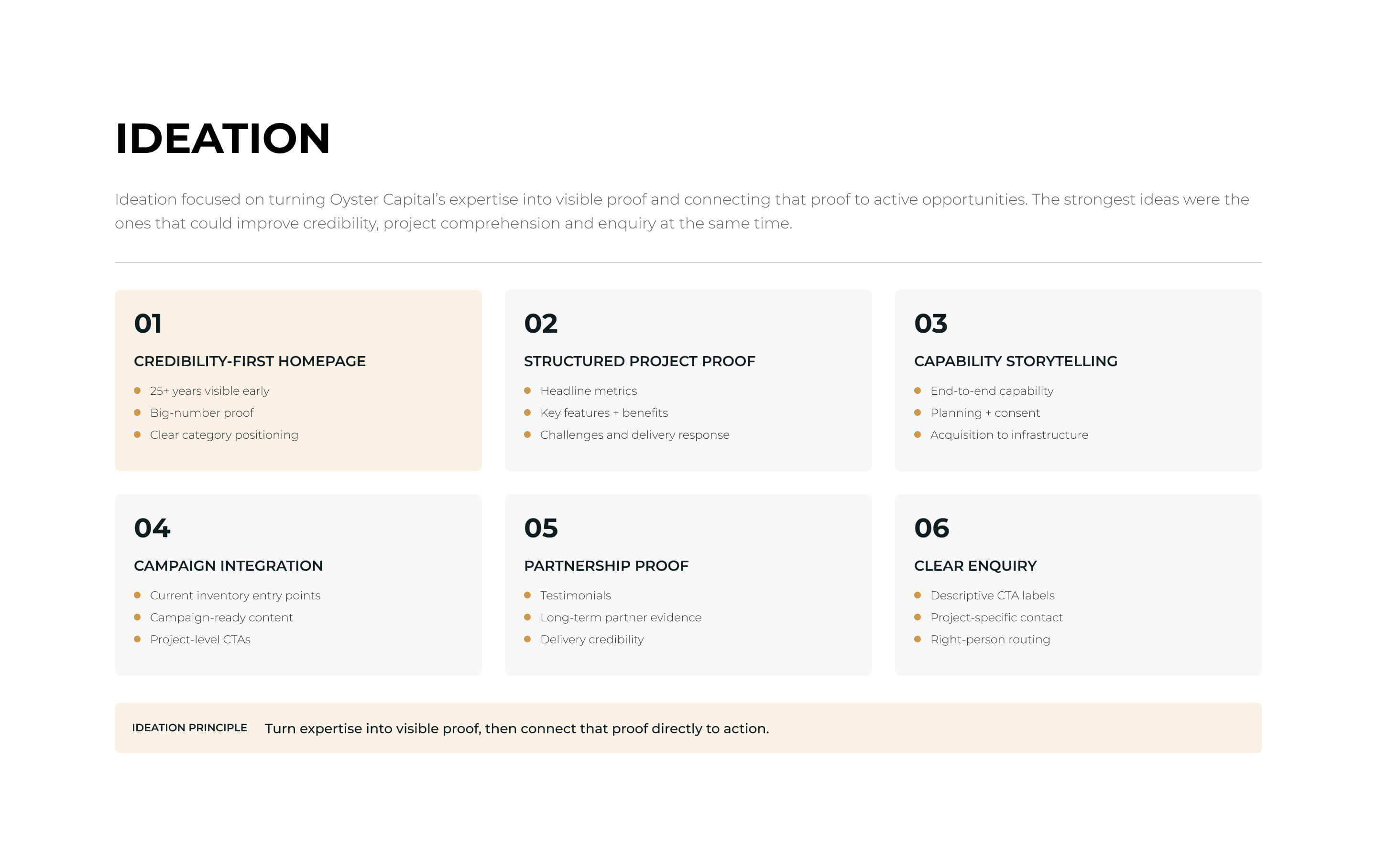
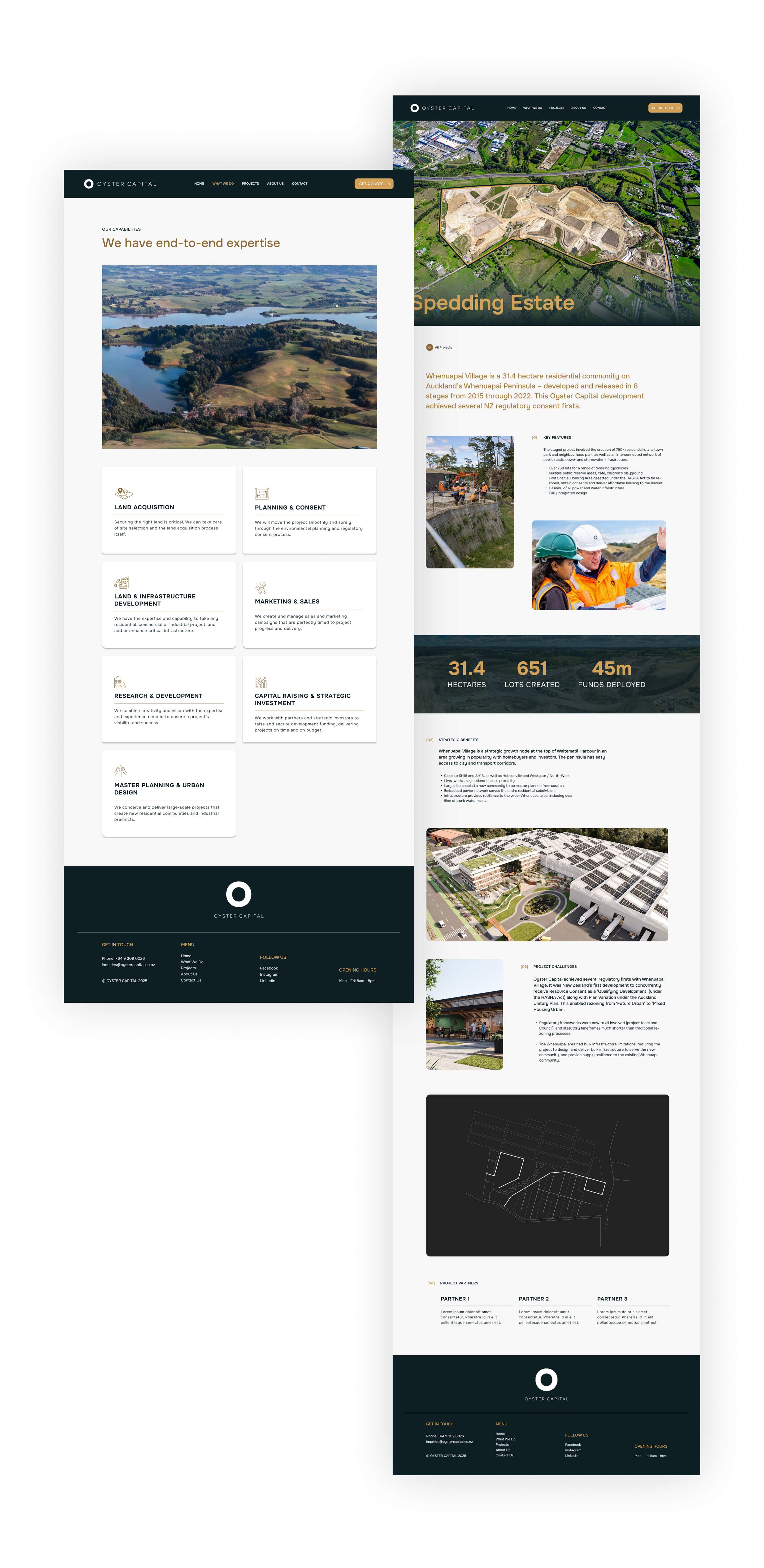
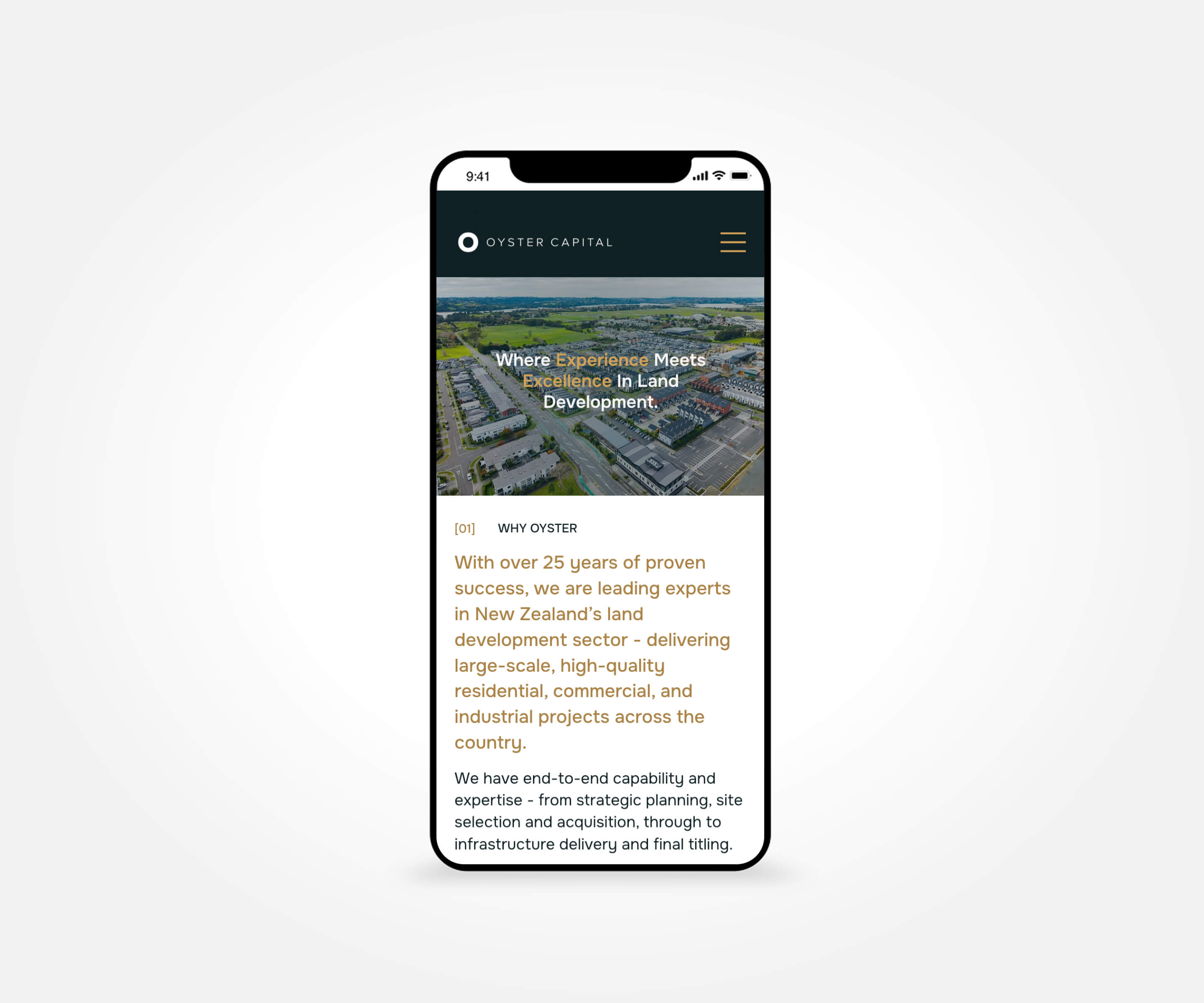
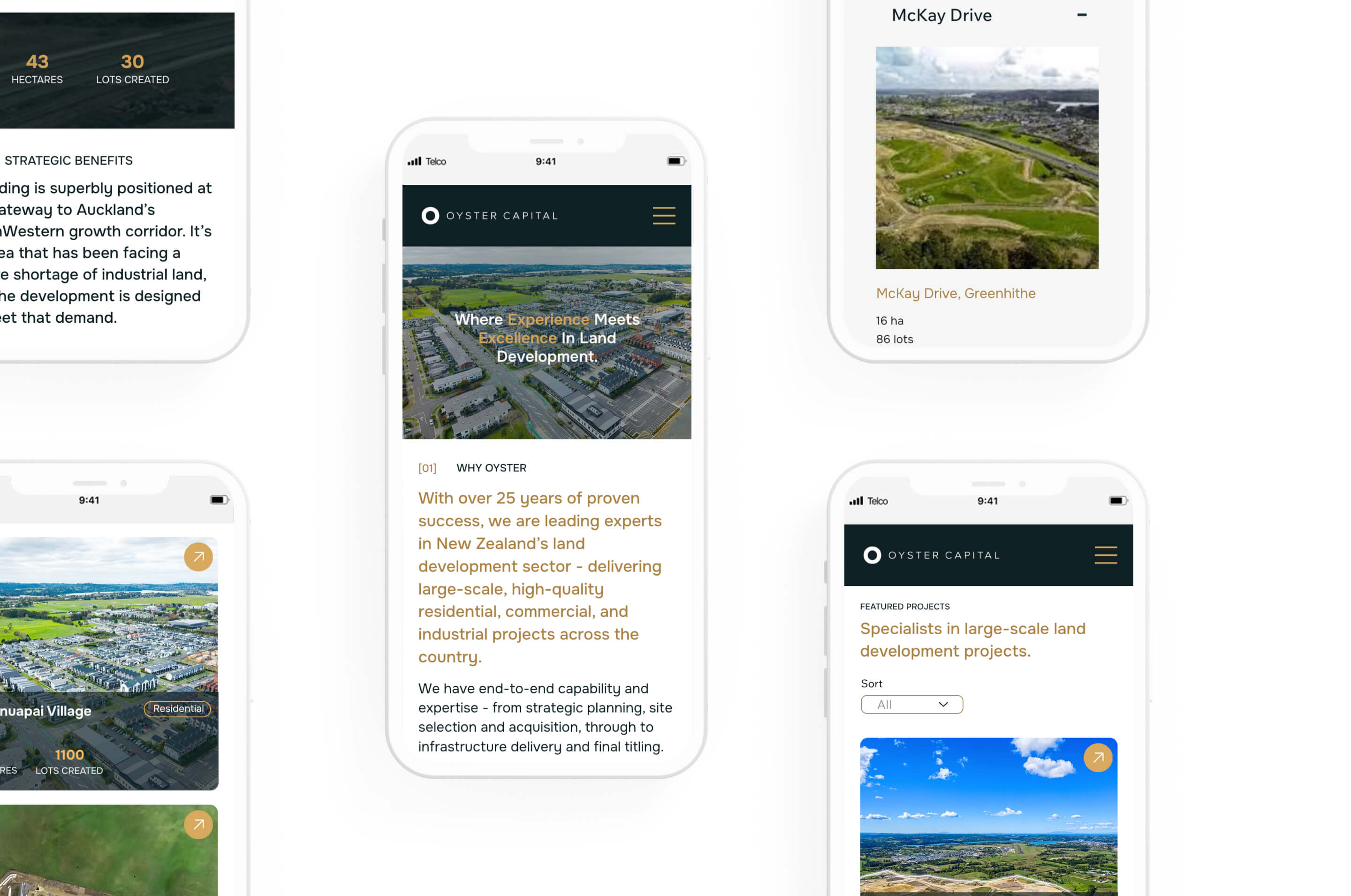
We turned Oyster Capital’s track record into the centre of the experience, leading with the proof rather than making users work to find it. 25+ years of experience, major projects, complex planning and consenting wins, capabilities and partnerships were brought forward, with sales opportunities woven into the same story to create a stronger path from credibility to enquiry.
WEBSITE LAUNCHED JULY 2025


Design System
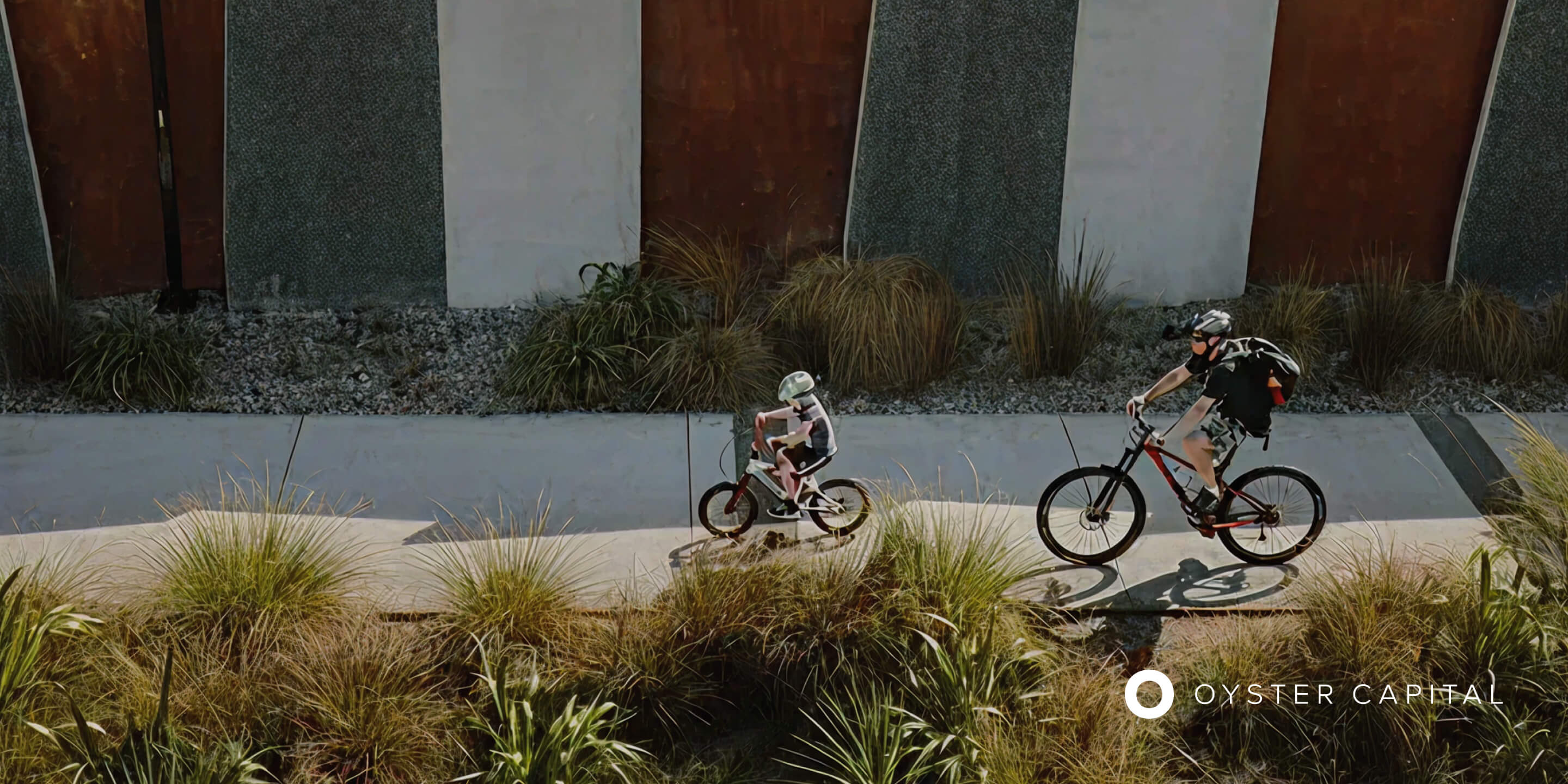
Oyster Capital didn’t need a loud design system. It needed one that felt confident enough to let the work speak for itself.
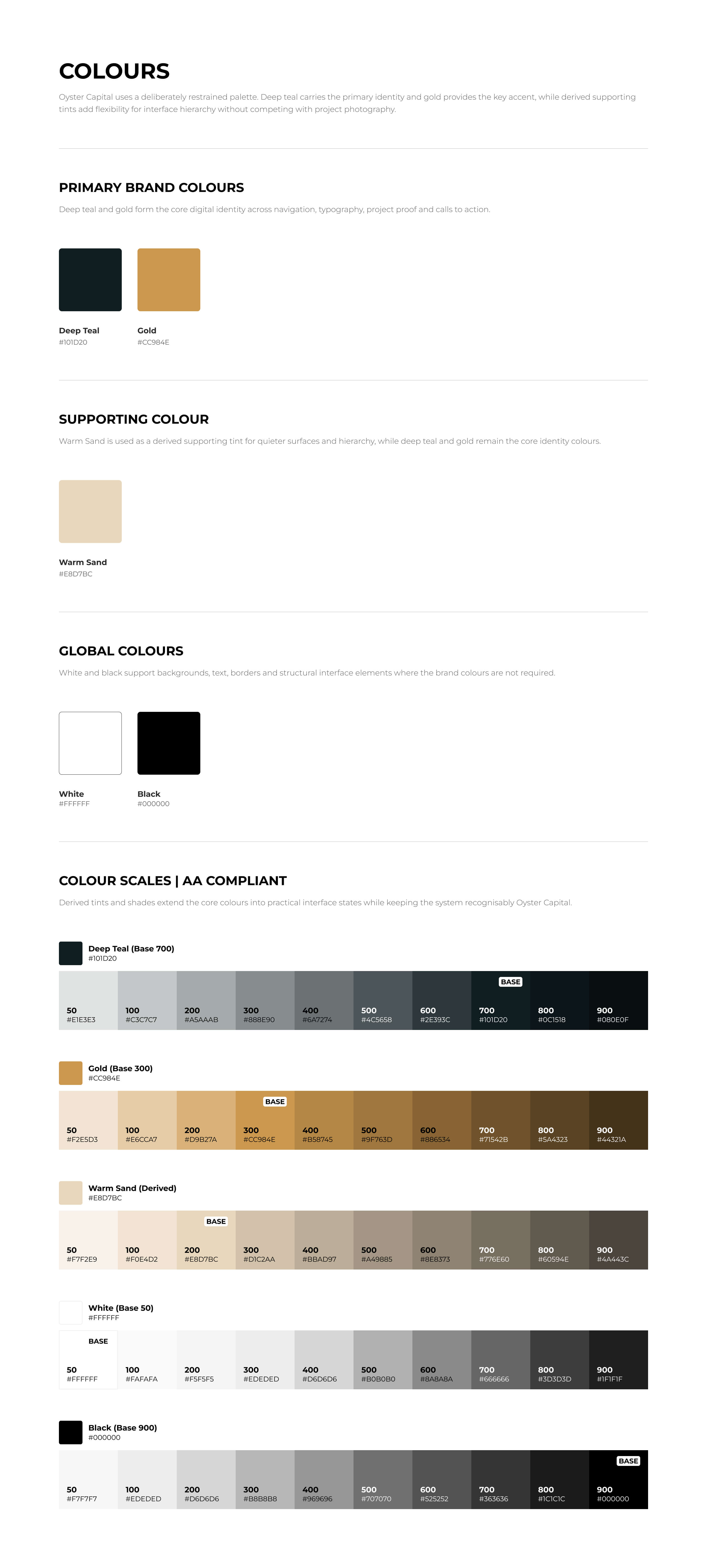
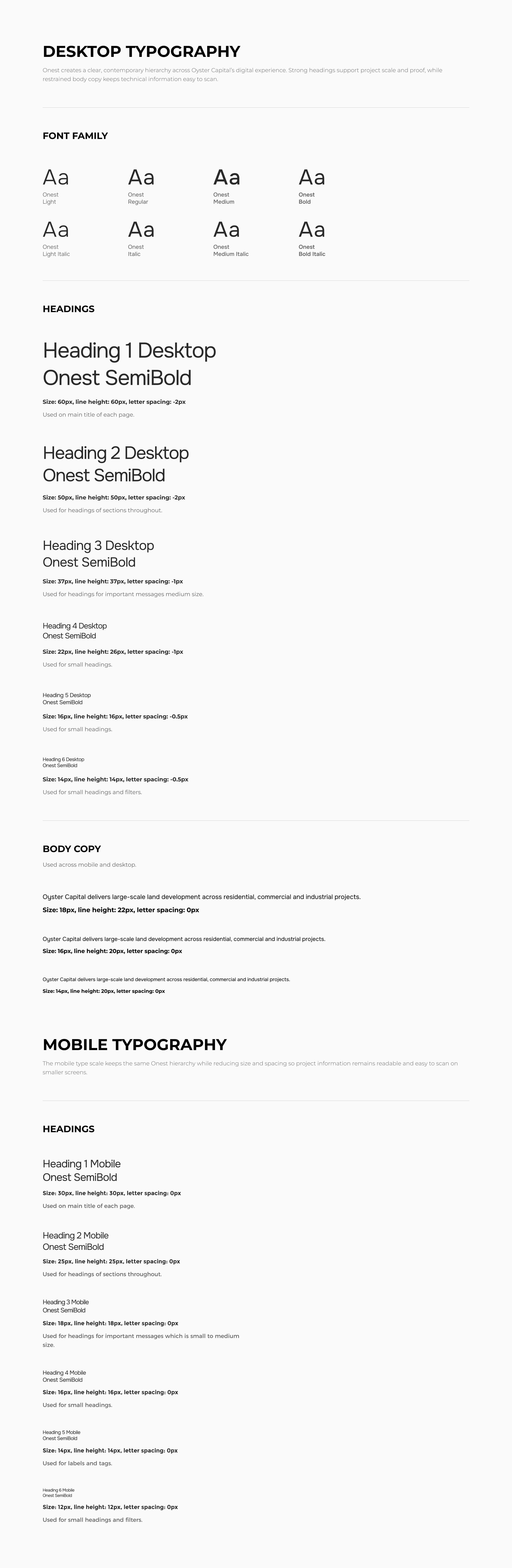
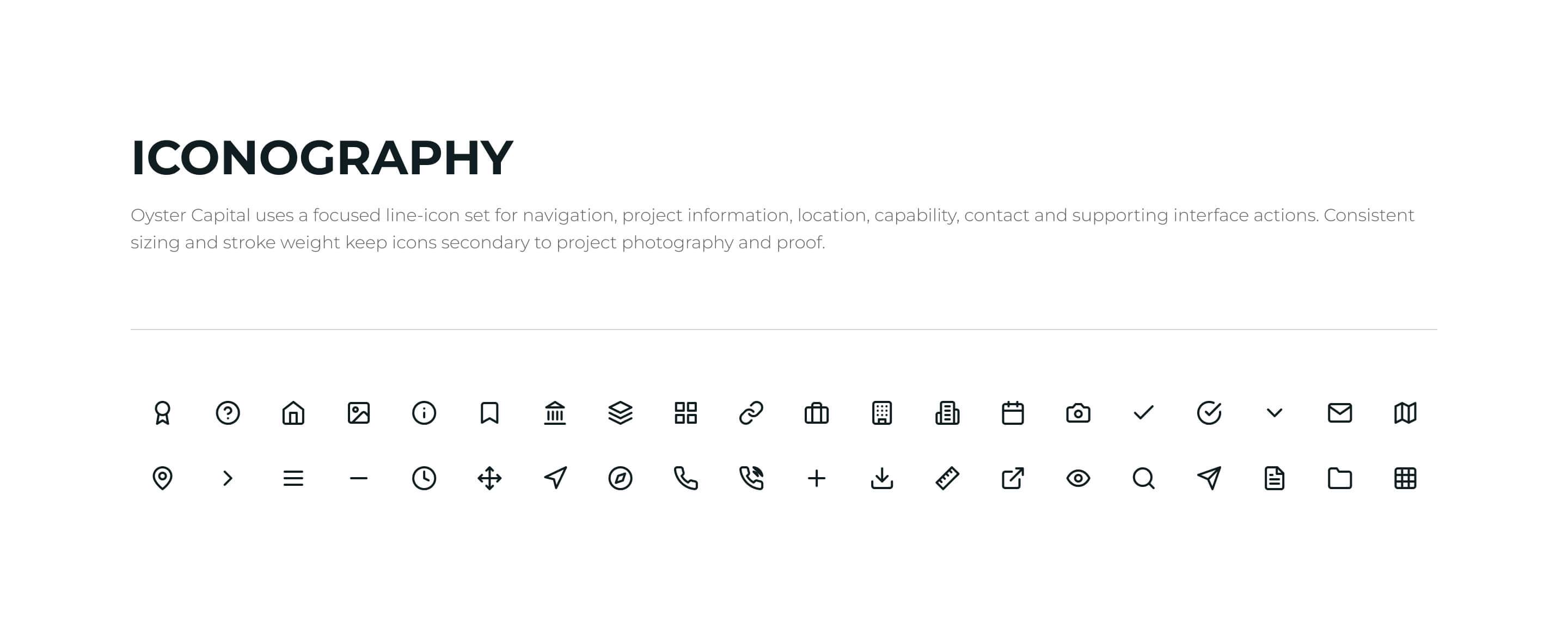
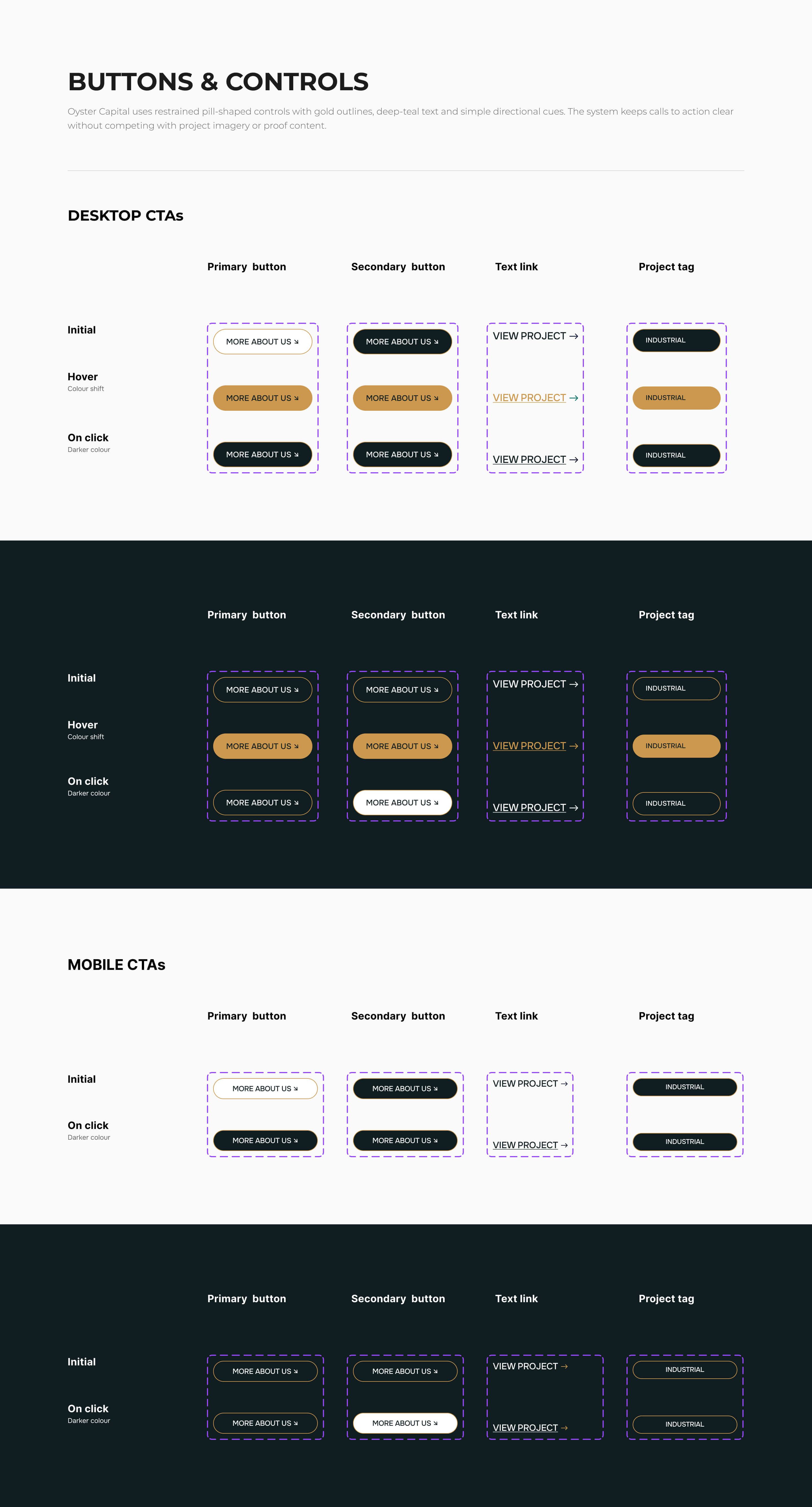
Deep teal gives the experience weight and authority, while gold is used with restraint to create contrast and signal interaction. Onest keeps the typography contemporary and direct, and the pill-shaped controls soften the experience without making it feel casual.
The result is a system that feels premium, considered and deliberately understated, giving project imagery, scale and proof the space to do the heavy lifting.

UX Strategy & Design
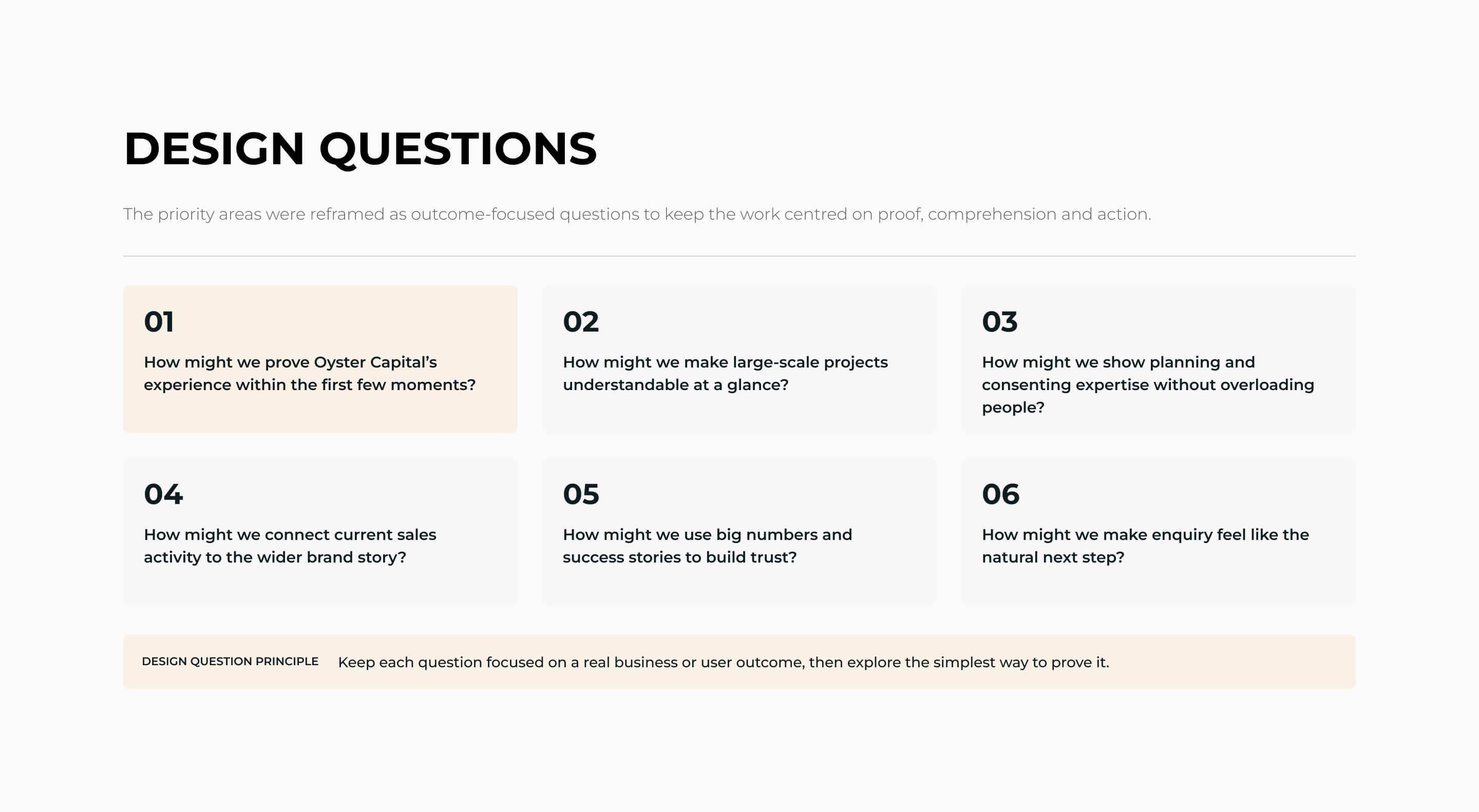
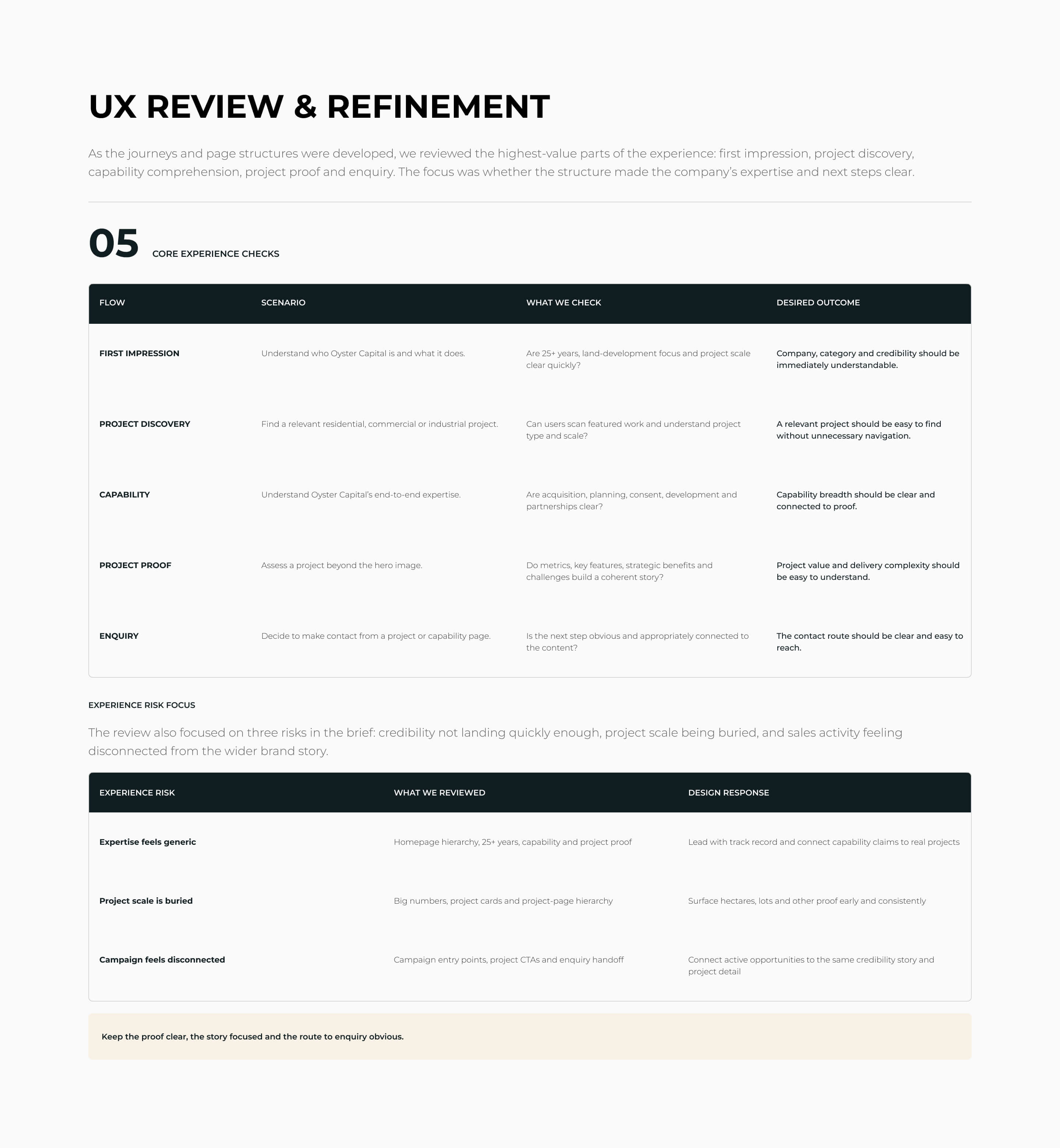
The challenge wasn’t simply getting people to an enquiry. It was giving them enough confidence in Oyster Capital to want to make one.
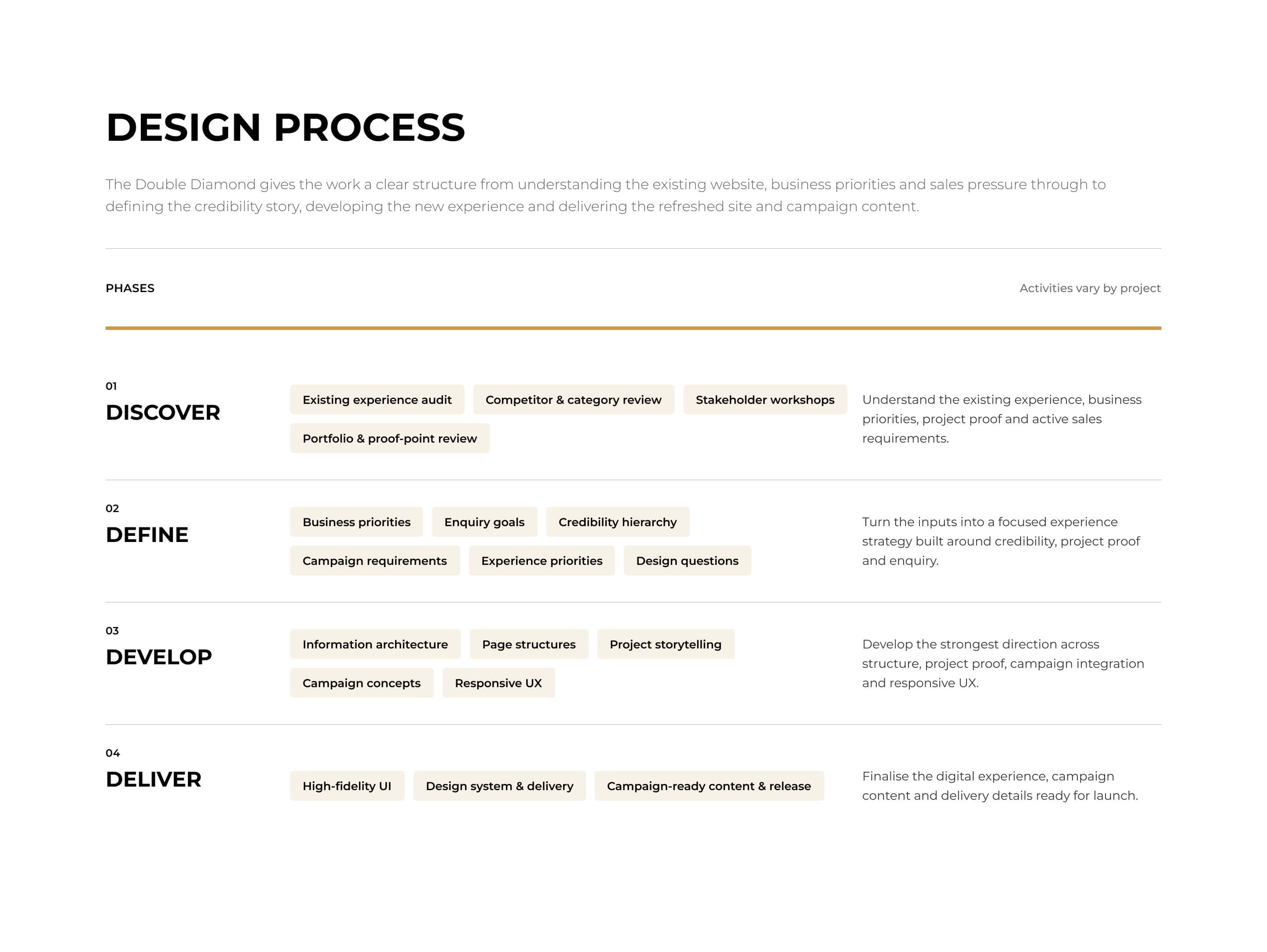
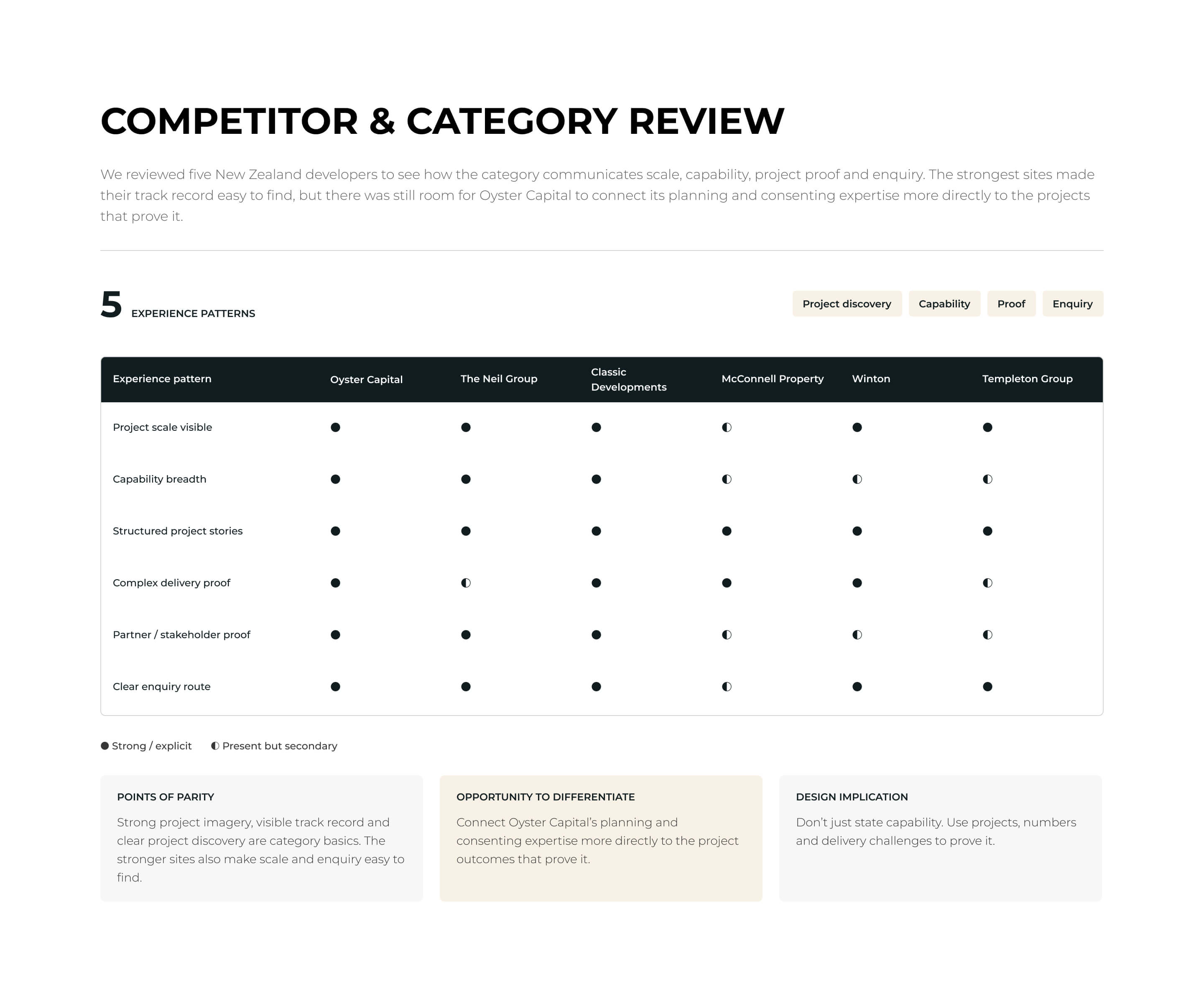
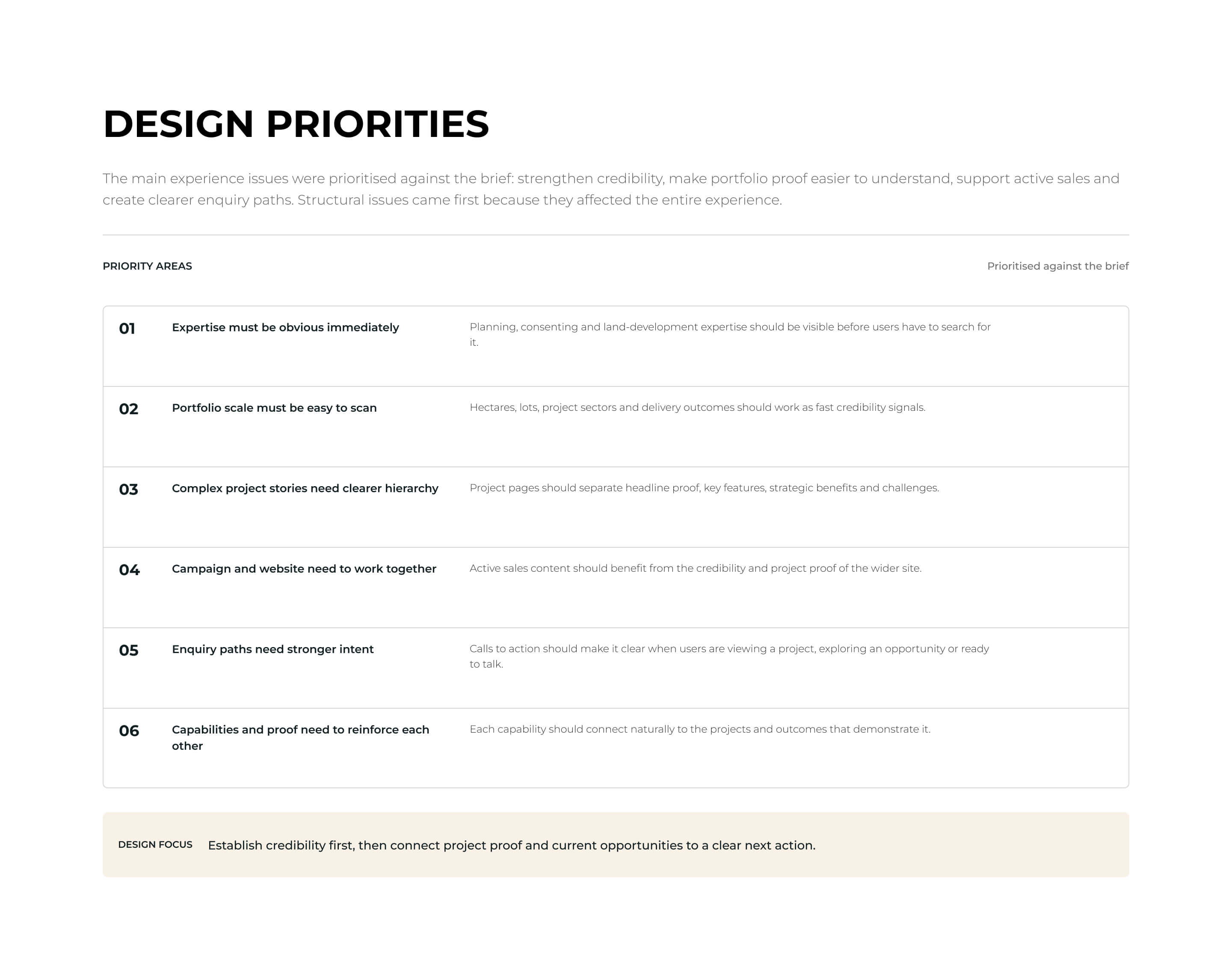
The site needed to establish credibility quickly while still supporting active sales. Workshops, the existing site audit and category review pointed to the same opportunity: bring the proof forward. Experience, project scale, planning and consenting expertise, capabilities and delivered work all needed to work harder.
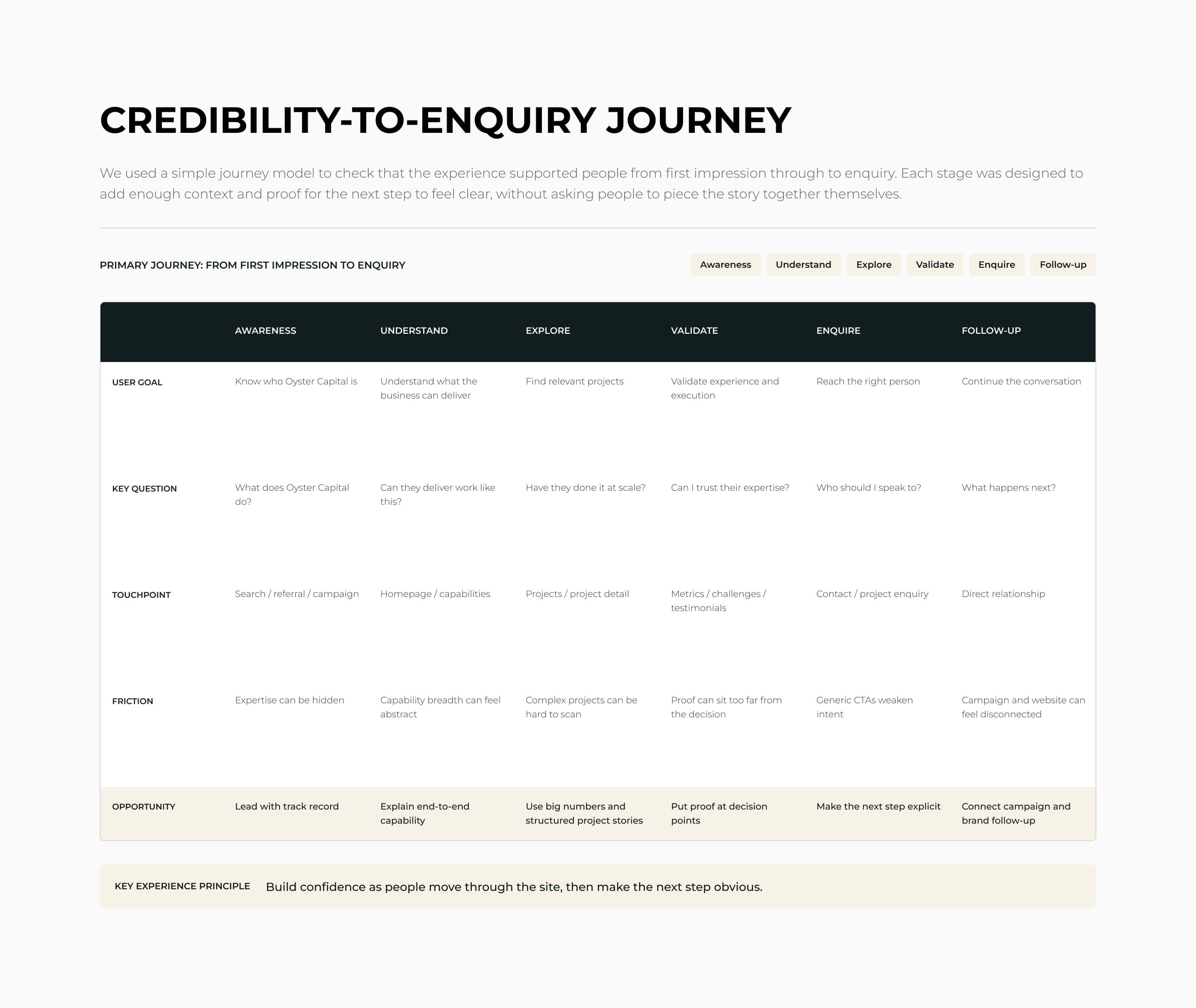
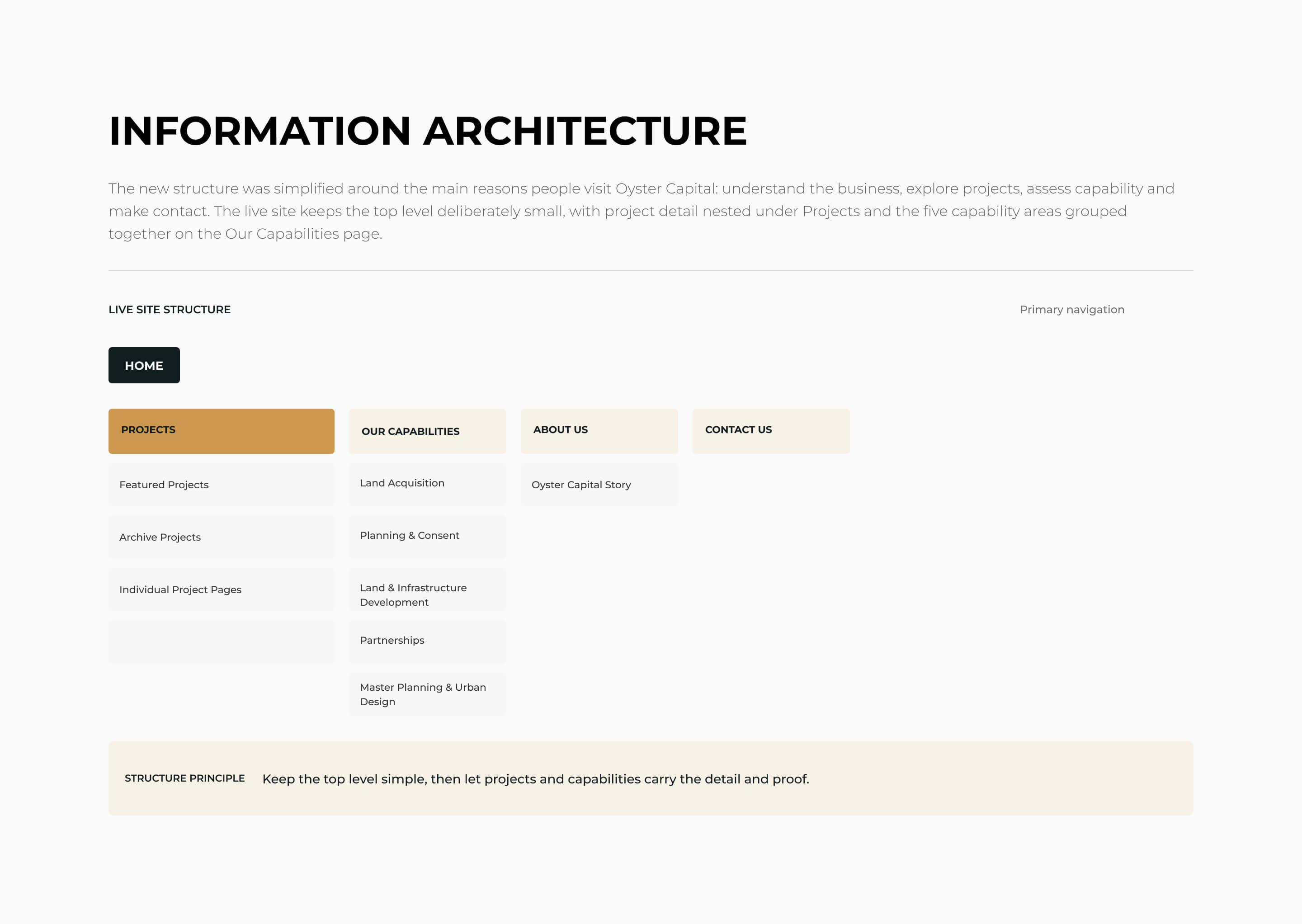
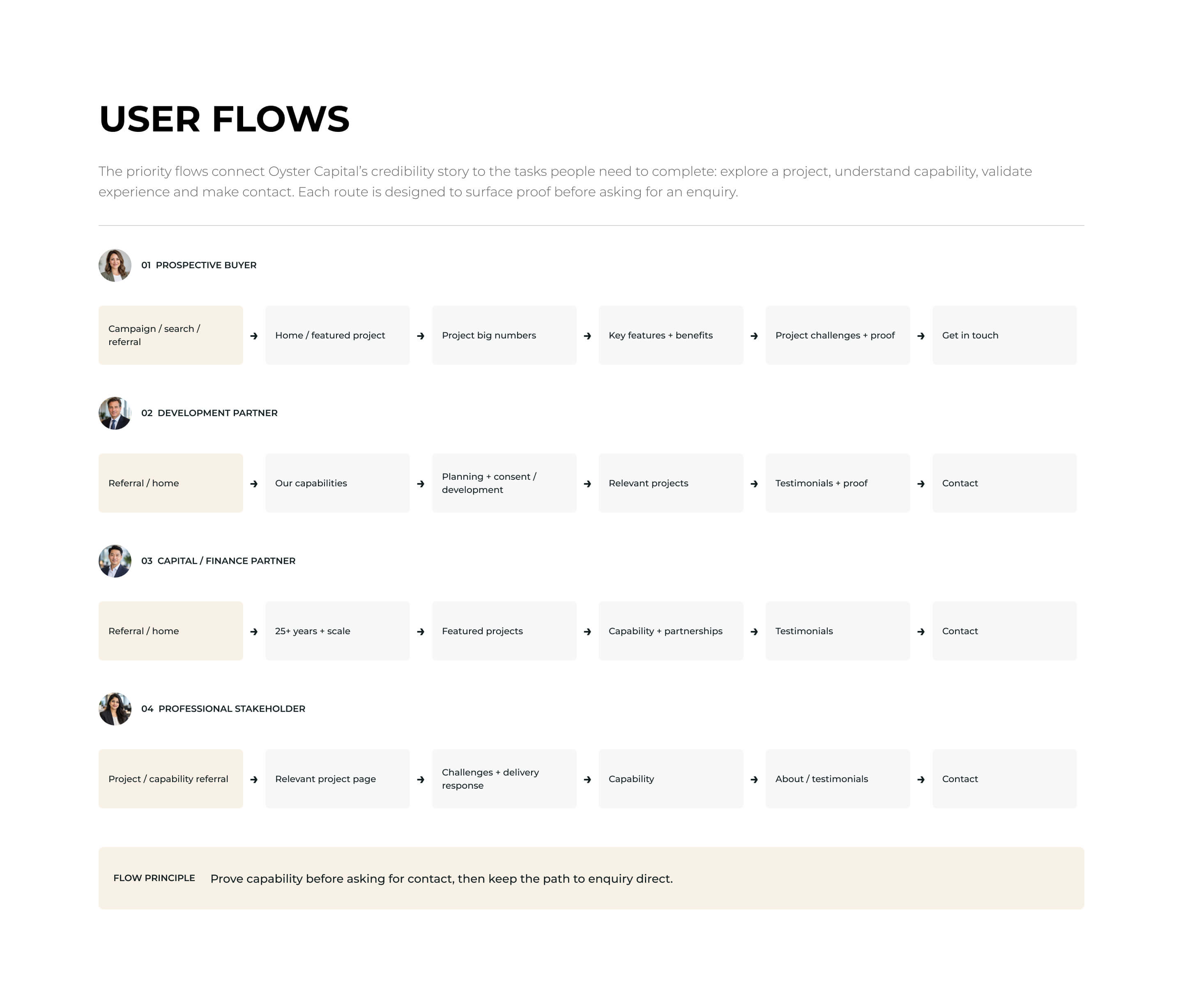
The UX was shaped around helping people understand the scale of the business, see the evidence behind it and then move naturally into the project, capability or sales opportunity most relevant to them.